
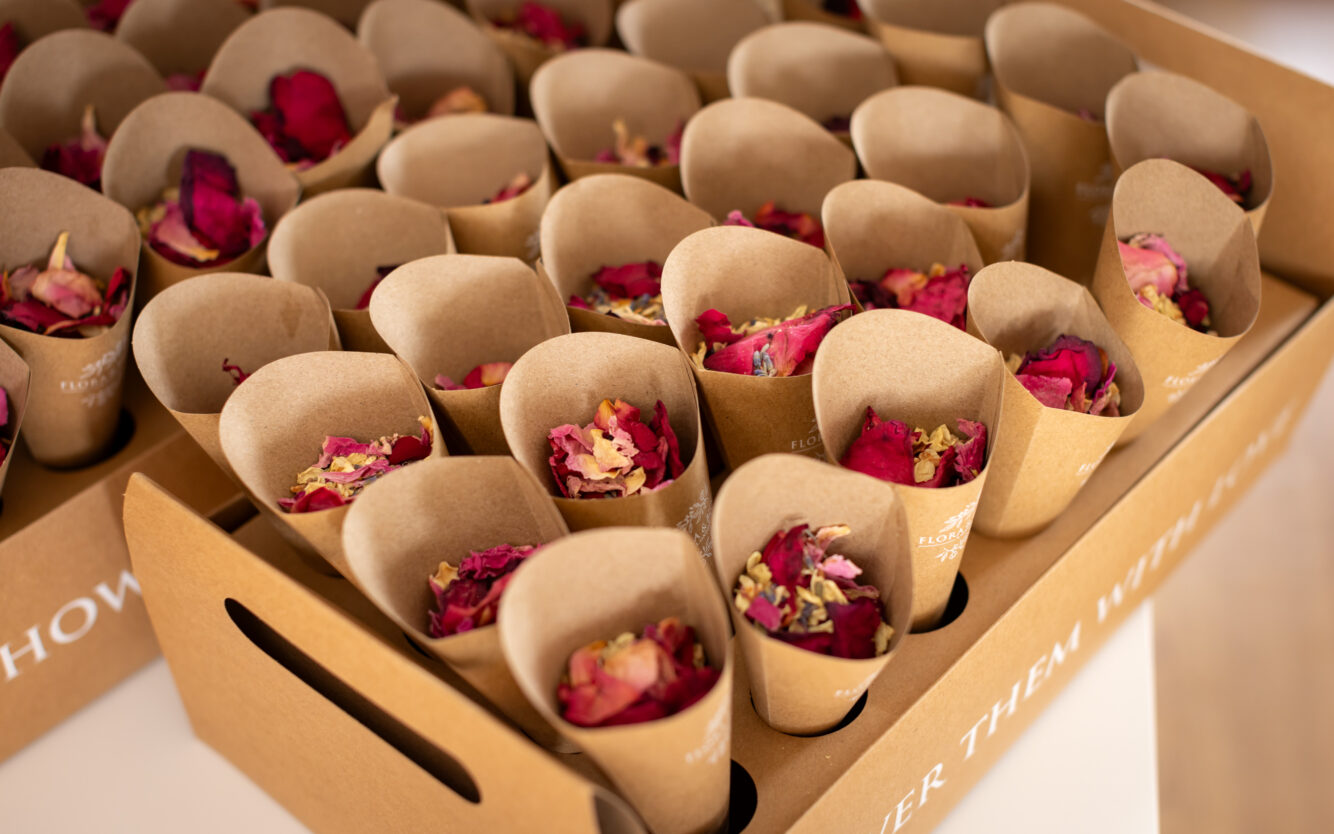
Last summer, Eco Church team member Polly attended her nephew’s wedding at St Nicholas Church, Wasing. Guests were asked not to bring conventional confetti in line with the church’s confetti policy – avoiding glitter, plastic, or paper confetti. Embracing the challenge, Polly turned to the blousy roses in her garden, thankful for a spell of hot sunny days which meant they dried quickly, so she didn’t end up with a pile of mouldy petals! With the encouragement to avoid plastic confetti in place of real rose petals, a conversation around confetti and its impact had begun amongst the wedding guests.
Traditional confetti may be small, but its impact is significant. Often made from PVC (polyvinyl chloride) and other plastics, which we know have a lasting environmental impact, it pollutes soil and waterways with microplastics. It can also harm wildlife, as they are attracted to the shiny material and may make nests with it or eat it. By contrast, thoughtful alternatives show how simple choices can protect creation.
The little chapel of St Nicholas’ Church, Wasing, achieved their Bronze Eco Church award in 2023, and have not allowed artificial confetti for over fifteen years! As a small, rural church, they only have one Sunday service a month, but over fifty weddings per year – that’s fifty couples, their friends and family, as well as florists, photographers and other wedding vendors to inspire!
The church is set within the stunning Wasing Estate, which has never allowed traditional confetti since opening, suggesting biodegradable confetti or rose petals as alternatives. This year, Lisa Buffery, Head of Wasing Leisure Ltd, shares that they will no longer permit the use of floral foam for floral arrangements, and have suggested alternative ways to couples on how they can make these more sustainable. Some examples include using dried flowers that can be reused, or potted bulbs, herbs or plants that can be planted out in the garden afterwards. Tables can also be decorated with mini pots of succulents or bulbs that can double up as a wedding favour for guests to take home as a keepsake to remember the wedding, especially when they come into bloom in subsequent years.
Polly reflects on the beauty of the wedding – a commitment made by two people, and a celebration of their love for one another, with promises made before God, family and friends.
It was also a gentle but powerful witness by St Nicholas Church that caring for creation involves taking a stand. Eco Church often begins with small steps, and one might even suggest that banning artificial confetti might be a quick win (here’s an example of a sustainable flowers policy from the Sustainable Church Flowers movement), but the impact of such a decision is huge, proving that even simple actions can have a wide and lasting reach.
Read more about the impact of the floristry industry in the Plastics, Packaging and Waste in Floriculture Guide 2024 and find information and support at Sustainable Church Flowers.
Photo credit: Natural confetti by Mark Chivers photography.